
ILO
Quick Search
Show me:
Lifelong learning and skills for the future - World of Work Series
Paperback
- Author:
- International Labour Organisation (ILO)
- Publisher:
- International Labour Office
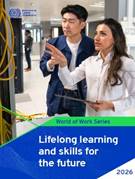
Lifelong Learning and Skills for the Future, part of the ILO World of Work Series, examines how effective lifelong learning systems can help workers of all ages access decent employment, enable enterprises to innovate and support societies through economic, technological, environmental and demographic change.
Drawing on institutional data, big-data analysis, a meta-analysis of 167 impact evaluations and a new survey tool assessing workplace learning, the report finds that access to quality training remains highly unequal. Low-qualified workers, informal workers and employees in smaller enterprises are particularly likely to miss out on opportunities that lead to recognised skills and qualifications.
The report argues that technical skills alone are not enough. Workers increasingly need rounded skills profiles that combine digital, technical and sustainability-related capabilities with teamwork, cognitive skills and practical knowledge. It also identifies the foundations of successful lifelong learning systems, including strong governance, coordinated institutions, sustainable financing and social dialogue, helping to ensure that everyone can learn, work and live with dignity in a changing world.
Key messages
-
Lifelong learning supports economic, social, civic and environmental goals, as well as access to decent employment.
-
Effective learning systems help workers adapt throughout their careers, while enabling enterprises to innovate and societies to thrive.
-
Access to quality training remains highly unequal, with many adults unable to obtain recognised skills and qualifications.
-
Low-qualified and informal workers, as well as workers in smaller enterprises, face particularly significant barriers to training.
-
Unequal access to learning risks deepening existing inequalities during the digital, green and demographic transitions.
-
A narrow focus on technical, digital, artificial intelligence or green skills is insufficient to meet changing labour-market needs.
-
Employers increasingly value rounded skills profiles that combine technical capabilities with teamwork, cognitive abilities and practical knowledge.
-
Workers with broader combinations of skills are more likely to experience better employment outcomes and higher-quality jobs.
-
Digitalisation and the green transition are reshaping demand for digital, technical and sustainability-related skills.
-
Whether these transitions generate decent work will depend on workforce capabilities, infrastructure and supportive industrial and employment policies.
-
Skills that create social value should be properly recognised, valued and remunerated.
| Extent | 211 pages | ISBN | 9789220433195 |
|---|---|---|---|
| Size | A4 | Price | £34.00 |
| Format | Published | 19 Aug 2026 | |
| Availability | In Stock: 1 - 2 days
 |
Delivery | Delivery options and charges |
 Show all Subjects & Categories